Semi-Automatic or CNC Tube Bender – What’s the Better Move?
Which type of bender do you need: semi-automatic or CNC? Learn how to make an informed decision on the best tube bender for your needs.
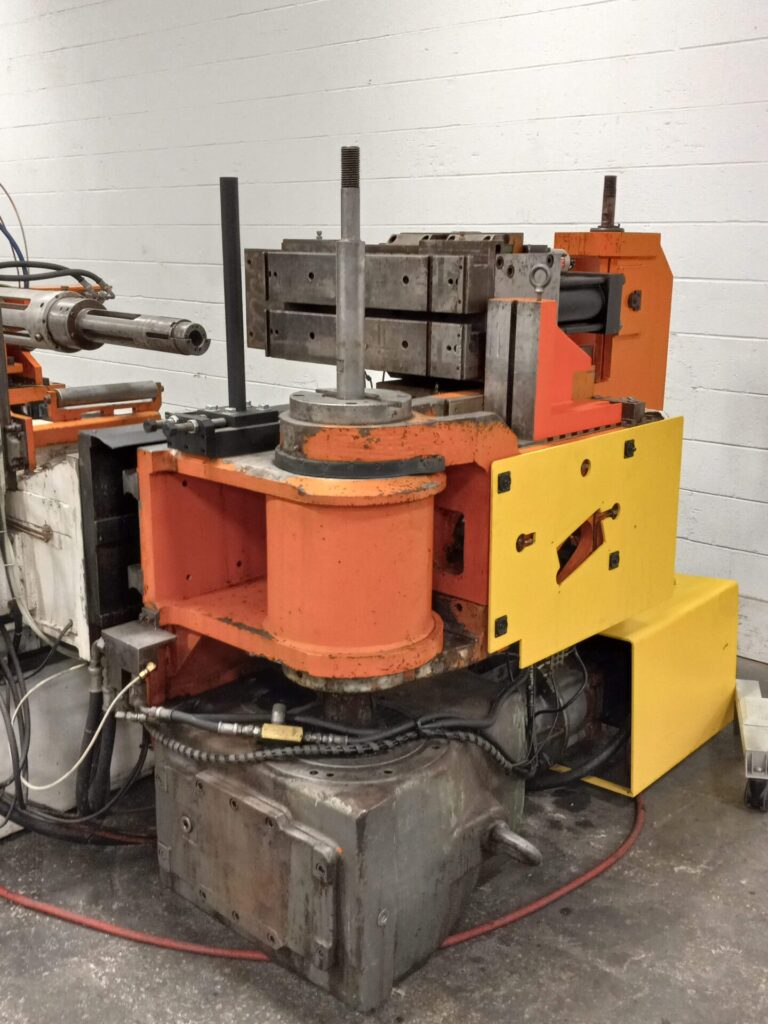
Read BlogTube and pipe bending machines are important in many types of manufacturing processes that involve shaping metal tubes and pipes into various angles, curves, and configurations to create a finished product. This process is essential in many industries and manufacturing methods, including automotive, aerospace, construction, plumbing, and custom manufacturing.
Bent tubes and pipes are ubiquitous in our daily lives, from the intricate piping systems in buildings to the sleek curves of a sports car’s exhaust system. They are also found in more specialized applications, such as ski lifts, roller coasters, and even medical equipment.
The ability to bend tubes and pipes with precision and efficiency is critical for ensuring the structural integrity, functionality, and aesthetics of countless products and structures. Whether it’s creating a smooth, curved handrail for a staircase or shaping the complex piping systems in a chemical plant, tube and pipe bending machines are important tools in modern manufacturing.
With advancements in technology, tube and pipe bending machines have become increasingly sophisticated, offering greater accuracy, adaptability, and automation. From computer-controlled (CNC) benders to manual and hydraulic systems, these machines cater to a wide range of bending requirements, materials, and production volumes.
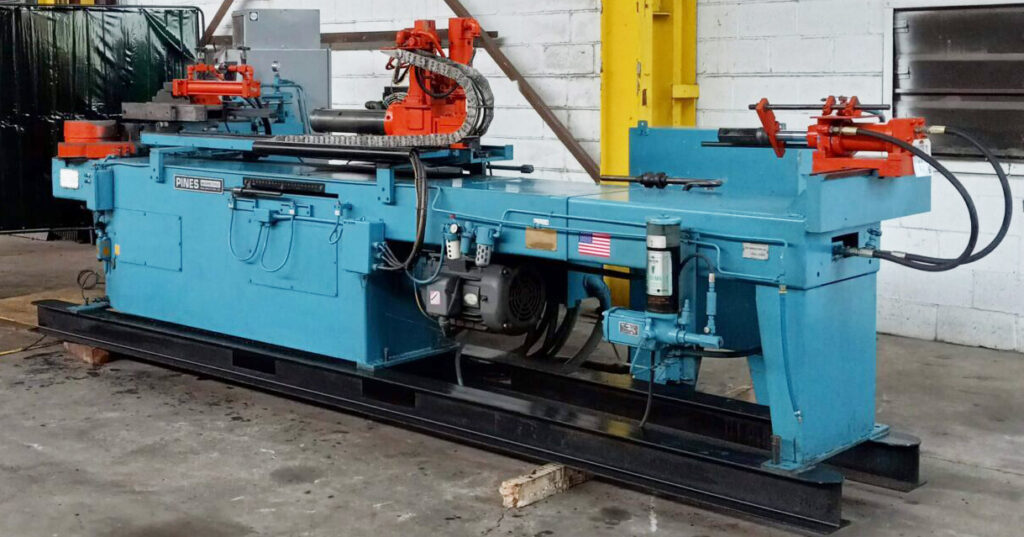
CNC tube benders are advanced machines that utilize computer numerical control (CNC) technology to perform precise and complex bending operations on tubes. These machines are highly adaptable and capable of shaping a wide range of materials, including stainless steel, aluminum, copper, and more, into intricate designs with exceptional accuracy.
CNC tube benders are equipped with user-friendly software that simplifies the programming and execution of bending tasks. This software allows operators to input specific parameters, such as bend angles, radii, and material properties, ensuring consistent and repeatable results. The advanced control systems minimize waste and optimize material utilization, contributing to cost-effective production processes.
One of the key advantages of CNC tube benders is their ability to handle large quantities of tubes while maintaining high precision and minimizing human error. These machines can efficiently bend tubes of various sizes and thicknesses, making them suitable for a diverse range of applications.
CNC tube bending is widely used in several industries, including:
Some of the leading brands in the CNC tube bending industry include:
These manufacturers offer advanced CNC tube bending solutions with varying capabilities, capacities, and features to cater to the specific needs of different industries and applications.
CNC Pipe Benders are similar to tube benders but designed specifically for pipe applications. The key difference between a tube and a pipe lies in the thickness of the product’s walls – a pipe has thick walls, while a tube has thinner walls. Additionally, pipes are always round, whereas tubes can sometimes be square or oval-shaped.
These machines are highly accurate, efficient, and adaptable, capable of bending pipes made from a wide range of materials, including steel, aluminum, and other metals. The CNC (Computer Numerical Control) technology allows for precise programming and automation of complex bending tasks, minimizing human error and ensuring consistent results.
CNC pipe bending is commonly used in industries such as automotive, aerospace, construction, and custom manufacturing, where precise and reliable pipe bending is essential for creating components, frames, and structural elements. Some of the leading brands for CNC pipe bending machines include Horn, Pines, and Schwarze-Robitec, known for their advanced technology, durability, and performance in demanding industrial environments.
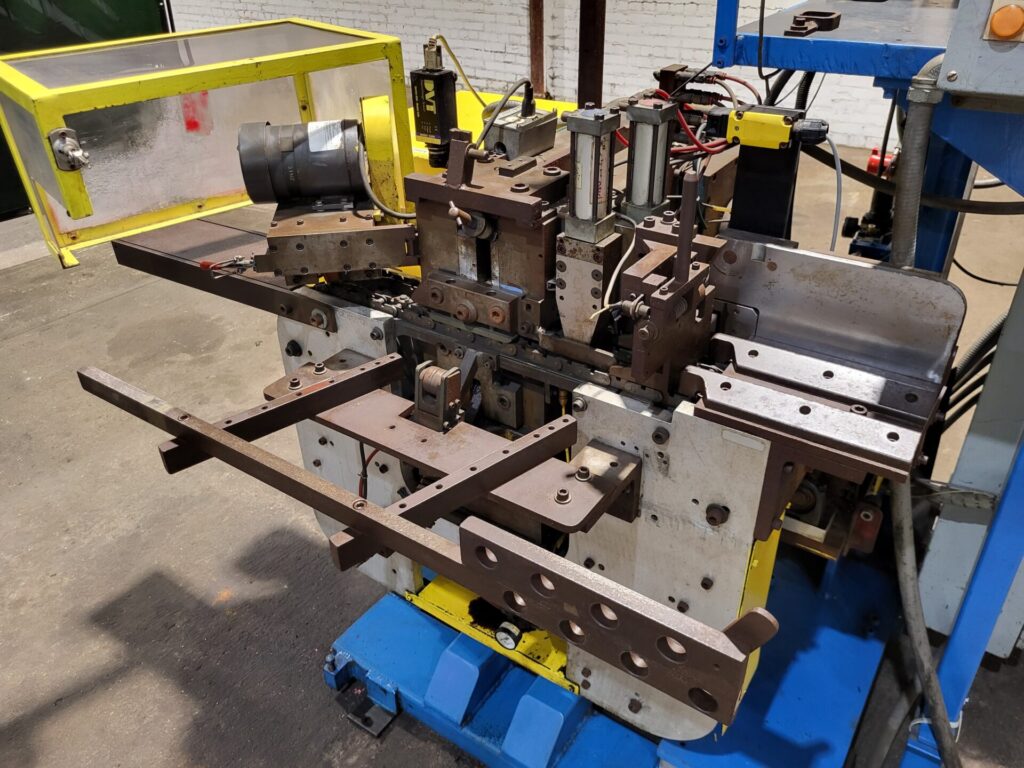
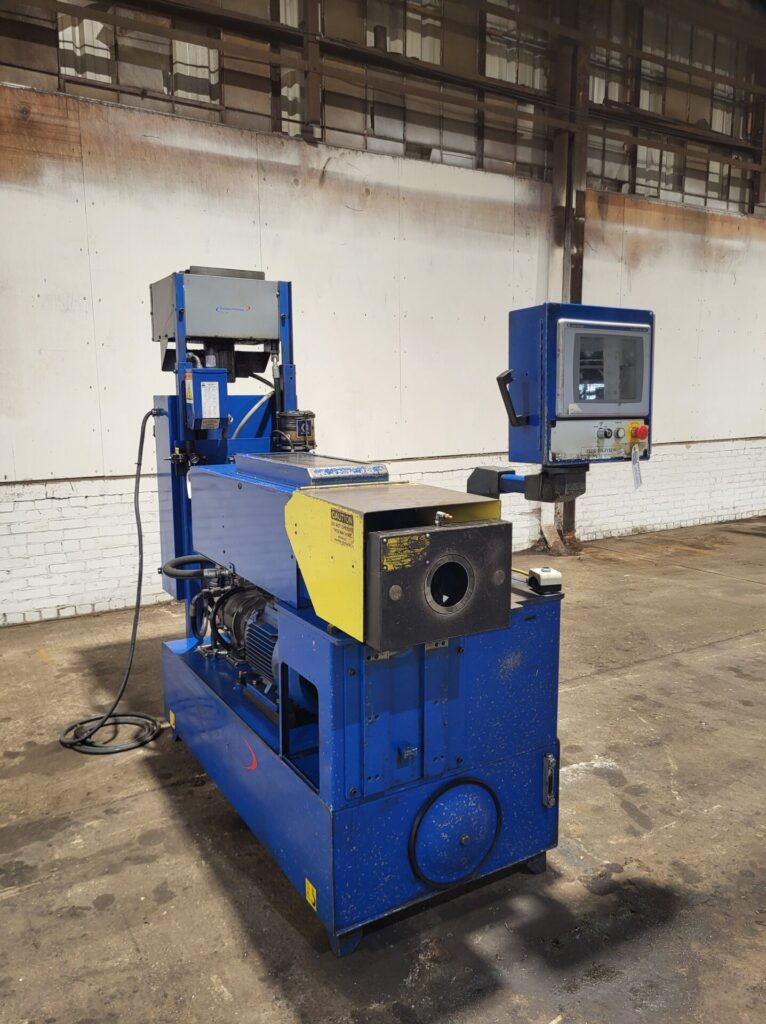
Tube end flaring and beading machines are designed to prepare the ends of tubes and pipes for joining with other tube or pipe sections. Flared ends have a conical shape and are connected to a corresponding tapered tube or pipe. Beaded tube ends are crimped to form a spout shape and are often used to connect hoses, slide into other metal tubes, or simply strengthen and protect the end of the tube.
These machines can handle a variety of materials, including copper, aluminum, mild steel, and stainless steel, among others. They offer a reliable and efficient way to prepare tube ends for various applications.
Tube end flaring and beading is commonly used in the automotive industry for tasks such as creating brake lines, fuel lines, and other fluid transfer systems. It’s also essential in heavy truck manufacturing, plumbing installations, and hose manufacturing, where secure and leak-proof connections are critical.
Some of the main brands for tube end flaring and beading machines include Conrac, Dickey, and Eaton Leonard. These manufacturers offer high-quality machines designed for precision and durability, ensuring consistent results and long-lasting performance.
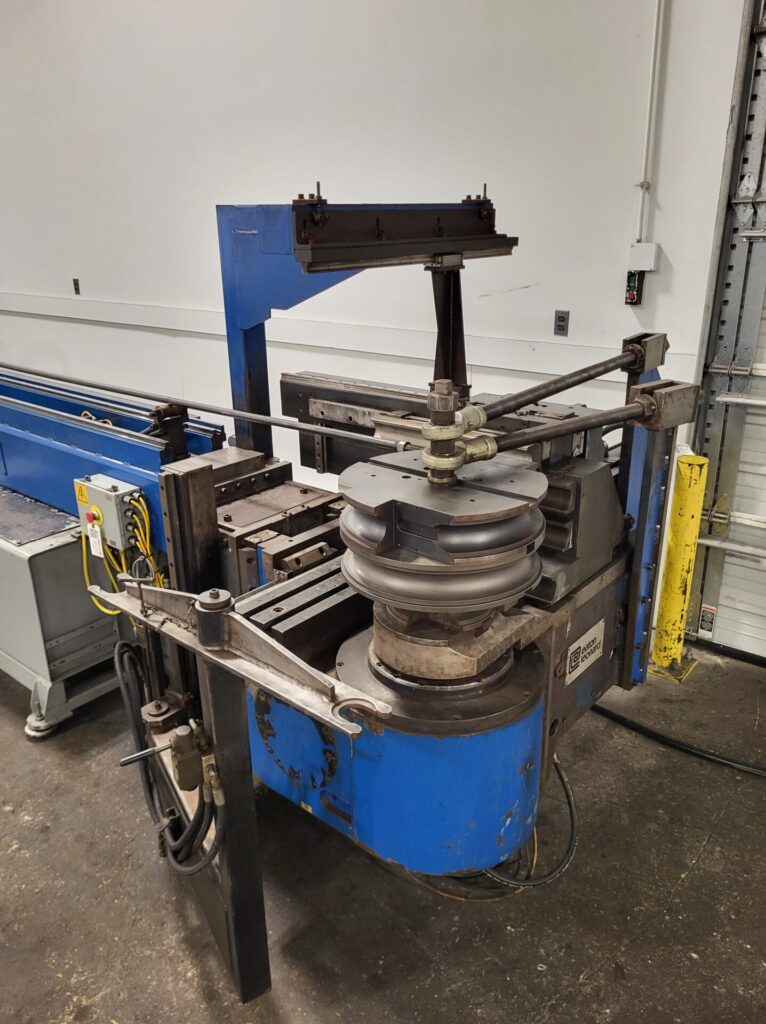
Manual bending machines are ideal for low-cost, on-site bending needs, while hydraulic bending machines offer greater power, precision, and efficiency for higher volume and more demanding applications like continuous process manufacturing. Manual bender machines are great for custom, one-off, or prototype projects, and they’re often lightweight and portable. Hydraulic bending machines are better for thick, tough materials as they have a much stronger bending force.
Manual and hydraulic benders are often used in gas pumps, automotive, construction equipment, elevators, and barber and office chairs.
Some of the main brands for manual and hydraulic bender machines are Eagle, MiiC, and Torrington.
Rotary Draw bending is a precision process suitable for both tight and large radius bends. You’ll commonly see this process used in creating exhaust systems, roll cages, and chassis components for vehicles, structural components for airplanes, frames for furniture, and for shaping handrails and other architectural elements in construction.
How Does It Work?
The tube or pipe is clamped into the machine with a series of dies, including a bending die, clamp die, and pressure die. The bending die determines the radius of the bend, while the clamp die and pressure die hold the tube in place and provide support during the bending process. The bending die rotates, drawing the tube around it. As the die turns, the tube is bent to conform to the shape of the die. The pressure die applies force to prevent the tube from flattening or wrinkling during the bend.
For bends that require additional support, a mandrel (a rod inserted into the tube) is used. The mandrel helps maintain the tube’s shape, particularly for tight radius bends or thin-walled tubes. A wiper die may also be used to prevent wrinkles on the inside of the bend. Once the desired bend angle is achieved, the machine stops, and the tube is unclamped. The bent tube is then removed from the machine.
Limitations
This process requires precise setup and alignment of dies, which can be time-consuming. Also, the initial investment in high-quality rotary draw bending machines and tooling can be high. Finally, while the machine is adaptable, certain materials and thicknesses may require specific adjustments or additional support tools.
Typically used for creating symmetrical bends, this process is known for its simplicity, speed, and efficiency, making it suitable for high-volume manufacturing. You’ll commonly see this process used in bending pipes in heating, ventilation, and air conditioning systems, creating uniform bends in chair frames and table legs, bending pipes in plumbing installations, and within automotive exhaust systems.
How Does It Work?
The tube or pipe is placed against a stationary bend die, which defines the shape and radius of the bend. A clamp or holding block secures the tube in place to ensure it does not move during the bending process. Next, a roller or compression die moves along the outside of the tube, pushing it against the stationary bend die. As the roller advances, it forces the tube to conform to the shape of the bend die. Finally, once the desired bend angle is achieved, the roller retracts, and the tube is unclamped and removed from the machine.
Limitations
Compression bending is less suitable for complex bends or tight radii. There is also a risk of the tube flattening or wrinkling, especially with thin-walled materials. Finally, compared to methods like rotary draw bending, compression bending offers less precision and control over the bend.
Roll bending is used to bend tubes, pipes, and structural shapes into large radius curves and circular shapes. This process is particularly useful for forming rings, coils, and large arcs, making it an essential technique in industries such as construction, shipbuilding, and manufacturing. Roll bending plays a part in forming arches, curved beams, and roof supports in construction, creating curved hulls and frames for ships, and producing coils and rings in manufacturing.
How Does It Work?
The tube or pipe is positioned between three rollers, typically arranged in a triangular configuration. The two lower rollers support the tube, while the upper roller applies downward pressure. The upper roller is adjusted to exert force on the tube, pushing it into a curved shape. As the rollers rotate, the tube is gradually formed into the desired radius. The position of the upper roller can be adjusted to achieve different bend radii. For tighter bends, the roller is positioned closer to the tube; for larger bends, it is positioned further away. Once the desired curvature is achieved, the tube is removed from the machine.
Limitations
While excellent for large radius bends, roll bending is less suitable for tight radius bends. The process also requires precise setup and alignment of rollers, which can be time-consuming for custom bends. Finally, the initial investment in roll bending machines can be significant, especially for heavy-duty applications.
Mandrel bending is used to bend tubes and pipes without causing them to collapse, wrinkle, or distort. This process involves the use of an internal mandrel, i.e., a solid or flexible rod, to support the tube’s interior during bending. This ensures a high-quality finish and maintains the tube’s structural integrity.
How Does It Work?
The tube is placed inside a bending machine and secured with clamps. A mandrel, typically made of steel or another hard material, is inserted into the tube. The tube is drawn around a bending die while the mandrel provides internal support. This combination prevents the tube from collapsing or wrinkling as it bends. After the bend is completed, the mandrel is carefully removed from the tube. The bent tube is unclamped and removed from the machine, ready for further processing or use.
Limitations
This process, like many, requires precise setup and alignment of the mandrel and dies, which can be time-consuming. Mandrel bending machines and mandrels can also be expensive, especially for specialized applications. Finally, the use of a mandrel can slow down the bending process compared to other methods, impacting production speed.
Investing in used tube and pipe bending machines can provide numerous advantages over purchasing new equipment. One of the most significant benefits is cost savings. Used machinery often comes at a fraction of the price of new equipment, allowing businesses to allocate their resources more efficiently.
Another advantage is immediate availability. When you purchase a new machine, you may have to wait several weeks or even months for delivery, leading to potential downtime and production delays. With used machinery, you can acquire the equipment you need quickly, minimizing disruptions to your operations.
Used machines also offer the opportunity for customization. Many suppliers offer the option to modify or retrofit used equipment with new features or upgrades to meet your specific requirements. This flexibility can be particularly valuable if you have unique production needs or want to incorporate the latest technological advancements. Additionally, used equipment suppliers often have a vast inventory of machines from various reputable brands. This wide selection allows you to compare options and choose the best solution for your tube and pipe bending needs, whether you prioritize reliability, precision, or versatility.
When it comes to sourcing high-quality tube and pipe bending machinery, AM Industrial is the trusted partner of hundreds of businesses. Feel confident partnering with AM Industrial knowing the following:
When you choose AM Industrial for your tube and pipe bending needs, you gain access to a vast selection of high-quality used machinery, backed by industry expertise and dedicated customer support. Contact us today to explore our inventory and find the perfect solution for your production line.
Semi-Automatic or CNC Tube Bender – What’s the Better Move?
Which type of bender do you need: semi-automatic or CNC? Learn how to make an informed decision on the best tube bender for your needs.
Read BlogHow to Bend Pipe Using a Pipe Bending Machine
Watch how a Pines #4 horizontal heavy-duty tube bender can bend 4" pipe efficiently.
Read BlogProper Tube Bending Terminology Part 2: Describing Bent Tubes
Learn more about tube bending terminology by understanding the characteristics of a bent part that can assist you in describing it to a supplier or a customer.
Read BlogAM Industrial Group sells industrial machinery to customers around the globe. If you have a question about any of our products or inventory, you may contact us at info@amindustrialgroup.com, support@amindustrialgroup.com for after-sales questions and support, or simply provide your information on the following form.
"*" indicates required fields